A “Too-Low” CA19-9 Can Also Signal Danger: NHRI Study Unveils Hidden High-Risk Pancreatic Cancer Patients
- Date: 2026-08-17
- Update: 2026-08-17
- Source: 國家衛生研究院
- Views: 222
Scientists at Taiwan’s National Health Research Institutes (NHRI), together with National Cheng Kung University, Kaohsiung Medical University, and their affiliated hospitals, have shown that adding a lower cutoff value for the tumor marker CA19-9 can uncover a group of pancreatic cancer patients whose disease is highly aggressive despite deceptively low or “normal” marker levels. The study, led by Dr. Yung-Yeh Su of NHRI’s National Institute of Cancer Research, was published in Clinical Cancer Research, a journal of the American Association for Cancer Research.
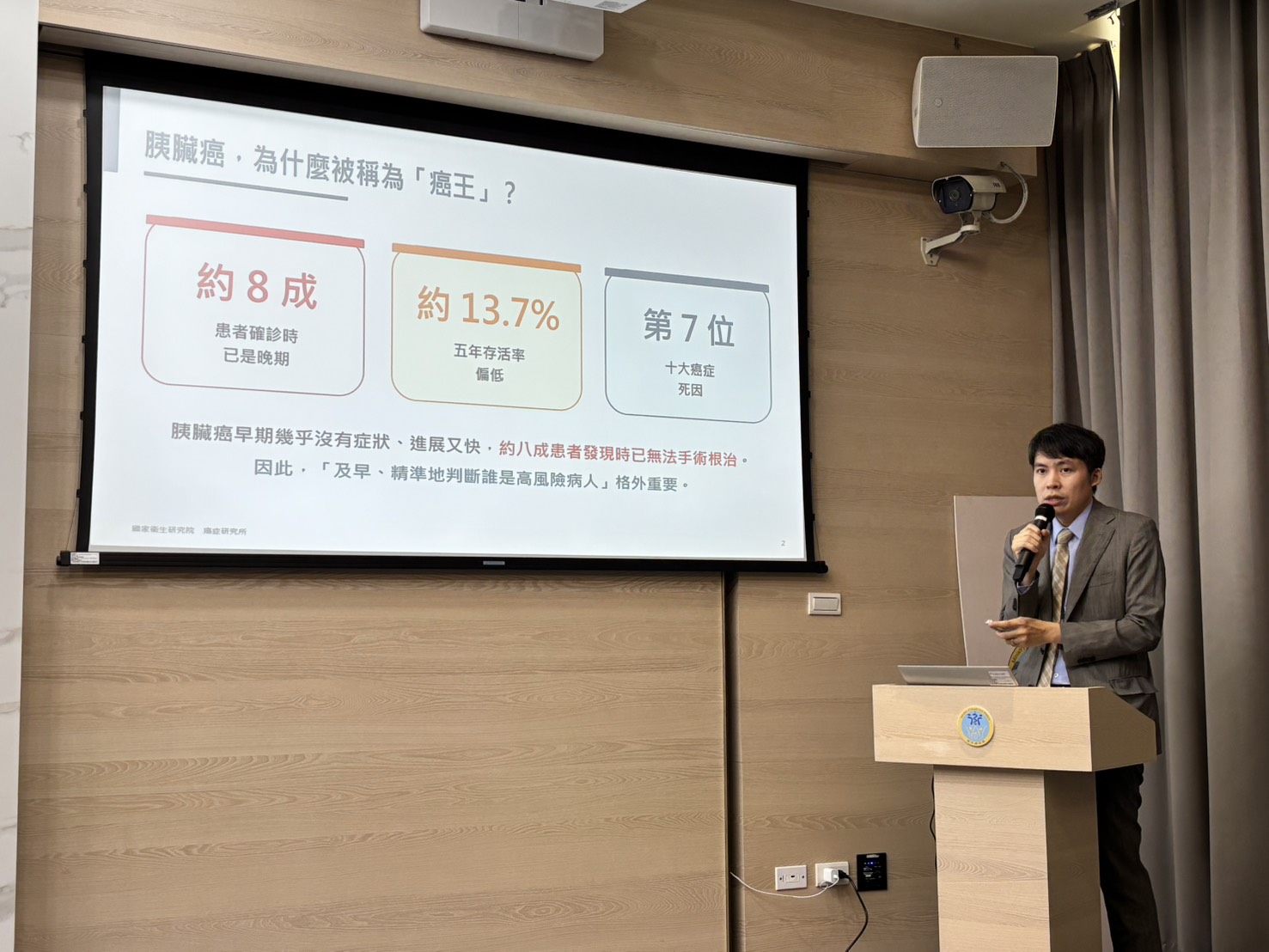
Pancreatic ductal adenocarcinoma is a highly lethal malignancy: roughly 80% of cases are diagnosed at an advanced stage, and the five-year survival rate is only about 13.7%. In daily practice, physicians rely on serum carbohydrate antigen 19-9 (CA19-9, also known as sialyl Lewis antigen A) for risk assessment, treatment guidance, and monitoring of treatment response, with levels below 37 U/mL conventionally regarded as normal.
However, approximately 10% of pancreatic cancer patients are CA19-9 “nonproducers.” Because of polymorphisms in the FUT3 gene, these patients lack sufficient fucosyltransferase activity to synthesize CA19-9 (a Lewis antigen-negative status). As a result, their CA19-9 can remain low—or even normal—no matter how advanced the tumor is, causing their true risk to be masked by a reassuring number.
“When CA19-9 levels are normal, clinicians cannot distinguish Lewis antigen-negative patients with advanced disease from those with a genuinely low tumor burden,” Dr. Su noted.
To address this problem, the team examined the relationships among genotypically determined Lewis antigen status, CA19-9 levels, and prognosis in 615 pancreatic cancer patients treated at two Taiwanese hospitals between 2013 and 2023. Whole-exome sequencing was used to determine each patient’s FUT2/FUT3 genotype, stratifying participants into four groups ranging from FUT3-null (CA19-9 nonproducers) to FUT-high.
In the training cohort, the researchers identified a CA19-9 cutoff of 7 U/mL or less for identifying Lewis antigen-negative patients. In independent validation, this cutoff achieved 87.9% accuracy—without any genotyping.
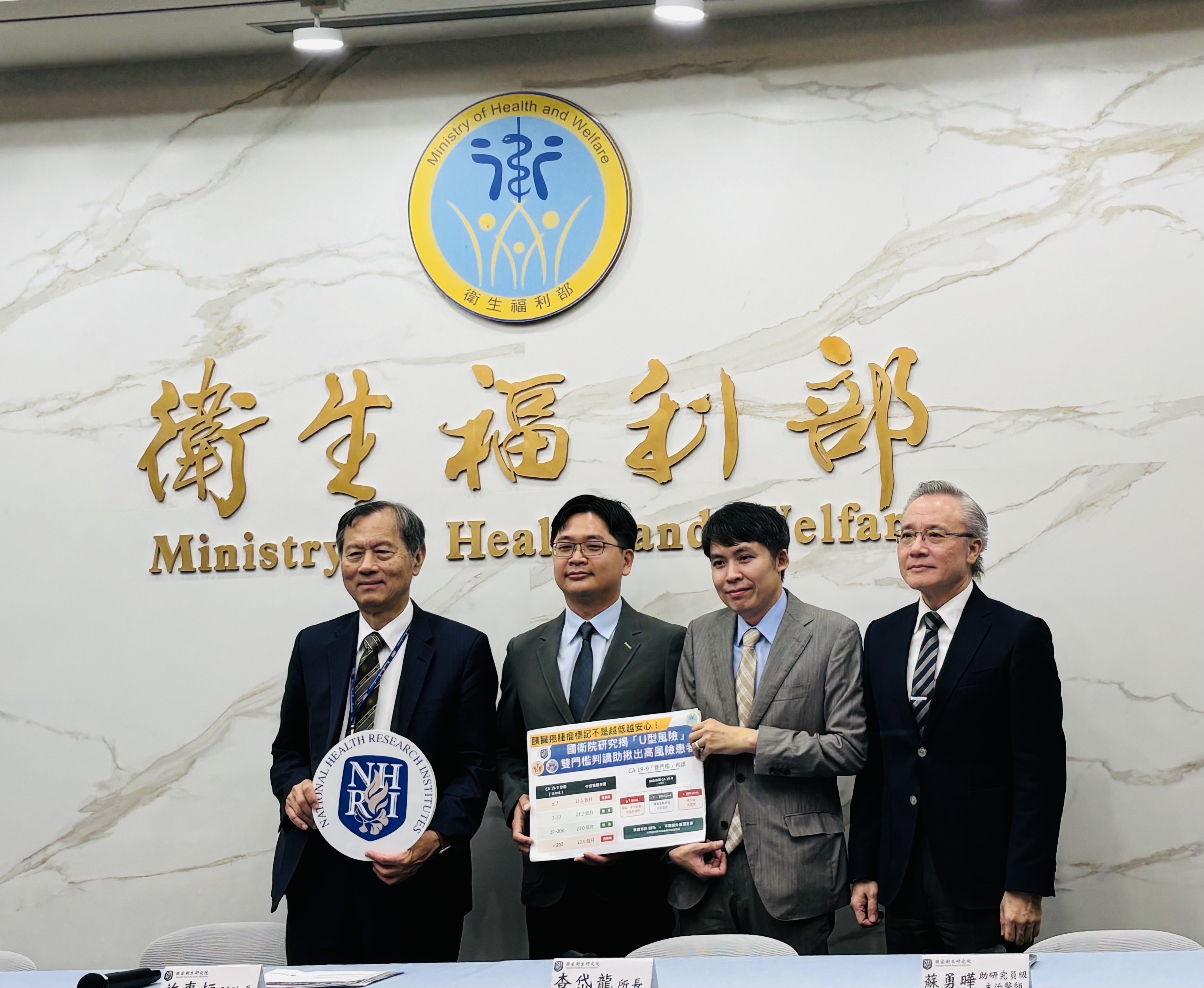
Critically, patients with CA19-9 of 7 U/mL or less had outcomes comparable to those with CA19-9 greater than 200 U/mL. Median overall survival was 13.5 months for CA19-9 of 7 U/mL or less and 12.8 months for CA19-9 greater than 200 U/mL, compared with 23.2 months for CA19-9 of 7–37 U/mL and 22 months for CA19-9 greater than 37–200 U/mL. In other words, the seemingly “safest,” very low CA19-9 values in fact conceal one of the worst-prognosis groups, producing a U-shaped risk curve.
Dr. Su explained: “The conventional normal CA19-9 range of less than 37 does not distinguish between true low tumor burden and Lewis-negative status. Using a CA19-9 cutoff of 7, we achieved about 88% accuracy in identifying Lewis antigen-negative patients, whose prognosis is poor despite ‘normal’ or very low CA19-9 values.”
The researchers therefore proposed a dual-threshold CA19-9 model: a value of 7 U/mL or less flags a likely Lewis antigen-negative, high-risk patient; values from greater than 7 up to 200 U/mL follow standard risk assessment; and values greater than 200 U/mL indicate high-producing, high-risk disease. Because the model uses only CA19-9 data that are already collected in routine care, it can reveal previously hidden high-risk patients and prompt earlier, more aggressive treatment and monitoring—all without requiring genotyping.
The authors note several limitations: the cohort was exclusively Taiwanese, and applicability to populations outside East Asia is unknown; CA19-9 assays vary across laboratories; and some CA19-9 elevations remain unexplained. An international validation study is planned as a next step.
The study did not require any new or expensive tests and would not change existing workflows; simply re-interpreting the CA19-9 values already in hand could make relatively “invisible” high-risk pancreatic cancer patients visible, offering a practical and immediately applicable strategy for precision risk stratification.
Related links
Related photos
-
合照.jpg
-
合照2.jpg
-
成果報告 國衛院蘇勇曄醫師.jpg
-
合照(左起)國衛院許惠恒副院長、癌症研究所葉家銘博士後研究員、蘇永曄助研究員級主治醫師、查岱龍所長.jpg
-
成果報告.jpg